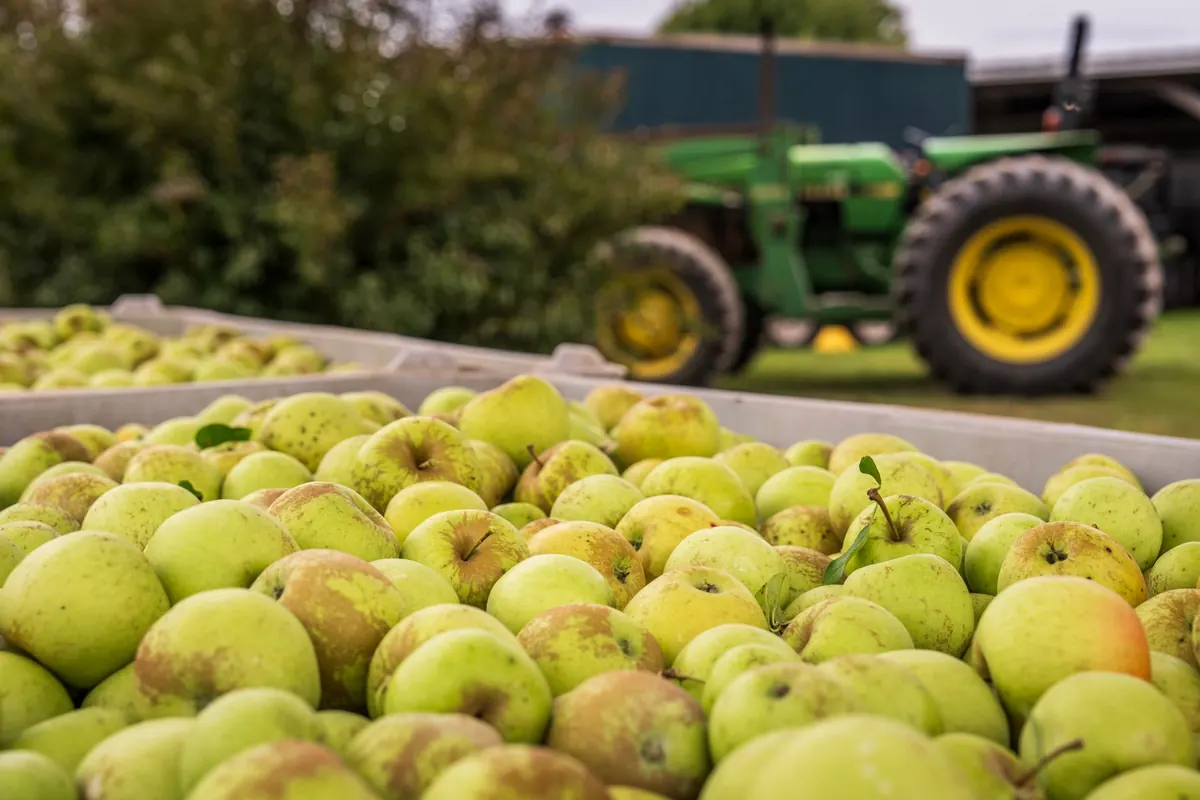
British fruit runs to its own timetable. A warm May can bring strawberries forward by a fortnight, while a dull, cool August leaves plums hanging on the tree well into September. Learning to read the season — and to judge ripeness on the plant rather than by the calendar alone — is the difference between a punnet of sharp, watery fruit and something worth carrying home in a bowl.
One rule sits underneath everything that follows. Some fruits carry on ripening after picking; others stop the moment they leave the plant. Plums, pears, apples and tomatoes will happily finish on a kitchen counter. Strawberries, raspberries, cherries and currants will not — pick them underripe and they simply soften and spoil rather than sweeten. Keep that distinction in mind and the rest of the year becomes far easier to plan.
Forced rhubarb arrives first, from January to March, grown in darkened sheds so the stalks stay pale and tender. Outdoor rhubarb runs from April into July. Pull the stalks with a gentle twist rather than cutting them, and take only a third of the plant at a time so it keeps cropping. Rhubarb does not ripen after picking — what you pull is what you get. The leaves are not edible, so compost them.
Strawberries follow from late May under polythene, with open-ground crops peaking in June and July. Colour is only part of the story: a ripe strawberry is deep red all the way to the shoulder, gives slightly under the thumb and smells sweet before you get it near your face. Everbearing varieties will trickle on into September if you keep picking and watering.
Gooseberries need a decision rather than a date. Pick them green and firm in June for jam, fools and chutney, or leave them until late July, when the berries turn translucent and soften, for eating raw. The dessert varieties are worth leaving; the culinary ones are not.
Sweet cherries need to ripen on the tree — there is no rescue for a pale, hard cherry — so net the tree before the blackbirds notice, and pick with the stalk attached. Morello cherries, being sour, are more forgiving and can come in slightly under-ripe for cooking.
Currants are a July job. Blackcurrants should be picked when fully black and soft; redcurrants and whitecurrants can hang on the bush for weeks and will keep improving. None of them ripen after picking, so taste as you go. Strip the strigs (the little stalks) with a fork if you have a lot to process.
Raspberries tell you plainly when they are ready: a ripe berry comes away with a light tug and leaves a pale cone on the plant. If it resists, walk on. Summer-fruiting canes crop in June and July; autumn-fruiting types start in August and often run to the first frosts. Hedgerow blackberries ripen from mid-August, best picked when they are dull black rather than glossy, when they drop into the hand with almost no pull at all.
Plums are the great exception among soft fruit. Pick them when they have coloured but are still slightly firm, with a short stalk, and let them finish in a fruit bowl for two to four days. Damsons are best left longer on the tree and are happier in gin, jam or a crumble than in the hand.
Pears are where most growers go wrong. They should never be left to soften on the tree. Lift a pear horizontally and twist: if the stalk snaps cleanly away, it is mature and ready to come in. Ripen it indoors at room temperature for three to seven days. Pears ripen from the inside out, so check the neck near the stalk rather than the body of the fruit.
Apples ripen from August, with early varieties such as Discovery, through to Bramley and the keepers in October and November. The lift-and-twist test works here too, and a brown pip or two is a good sign. A few windfalls underneath the tree is nature's own notification. Early apples are for eating now; they will not store.
Quinces come in from October, hard as wood and heavy with perfume. They barely change after picking, so leave them on the tree until they are fully yellow. They are cooking fruit — jelly, membrillo, or roasted alongside lamb.
Medlars are picked after the first frosts and then bletted: laid in a cool, dark place until they turn brown and soft, at which point the pulp is spooned out and eaten with cream. Sloes follow the same logic. If no frost has arrived, pick them and freeze them overnight instead; the result is the same for sloe gin.
Stored apples and pears see you through to February. Keep them in a cool, dark, rodent-proof place at around 2–4°C, in a single layer or in slatted trays, well away from other produce. Check them every fortnight and remove any that are softening or mouldering.
Room temperature, roughly 18–21°C, is the right setting for finishing fruit. Ethylene — the gas that fruit gives off as it ripens — is your ally here. A ripe banana or apple in a paper bag will speed up an avocado, a hard pear or a tray of green tomatoes. Plastic bags trap moisture and encourage mould, so use paper, or leave fruit uncovered with space to breathe.
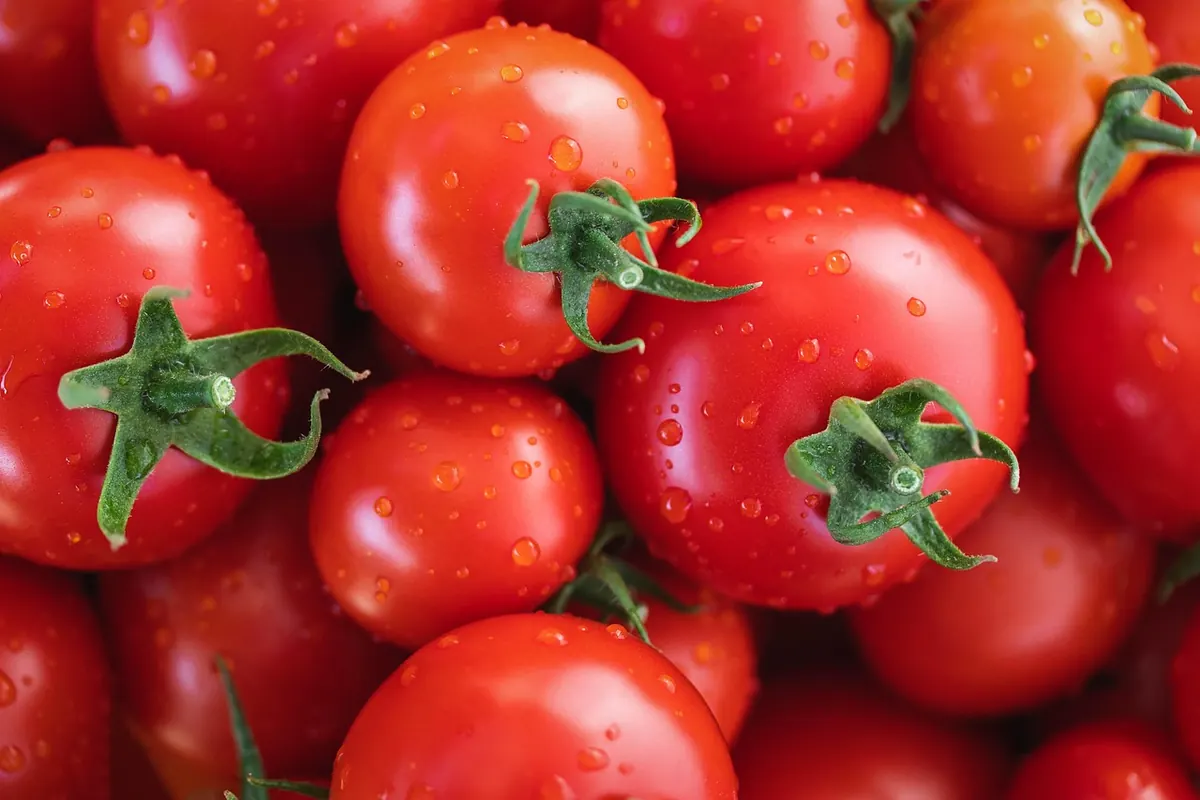
At the end of the tomato season, lay green fruit on a windowsill or in a drawer with a ripe banana and check daily. Anything that refuses to turn becomes chutney. Compost fruit that is mouldy or fermenting rather than adding it to the ripening box.
Dates shift by weeks depending on variety, soil, aspect and the summer we happen to get, so treat any calendar as a prompt rather than a rule. Taste is the final test, and it is a test you should apply often.
A few habits make the year run more smoothly. Pick in the morning once the dew has dried, when fruit is cool and firm. Chill soft fruit quickly and eat it within a day or two. Plant more than one variety of each fruit where you have space, so the harvest staggers rather than arriving in a single overwhelming week. Keep a notebook of picking dates — after two or three seasons it becomes the most useful document in the garden, telling you precisely when your own trees and bushes tend to be ready.
Then let the garden set the pace. There is a long, generous stretch from the first forced rhubarb to the last stored apple, and most of the pleasure lies in catching each fruit at exactly the right moment.
Photo: Mark Stebnicki / Pexels
Simple UK recipes that turn soft, overripe bananas, berries and stone fruit into banana bread, smoothies, compote...
A practical guide to the low-cost kit that controls humidity, airflow and ethylene when ripening fruit at home, from...
Learn how to ripen green tomatoes indoors before frost using paper bags, boxes and trays, with simple light and...

Bring your fruit to perfect ripeness at home.
