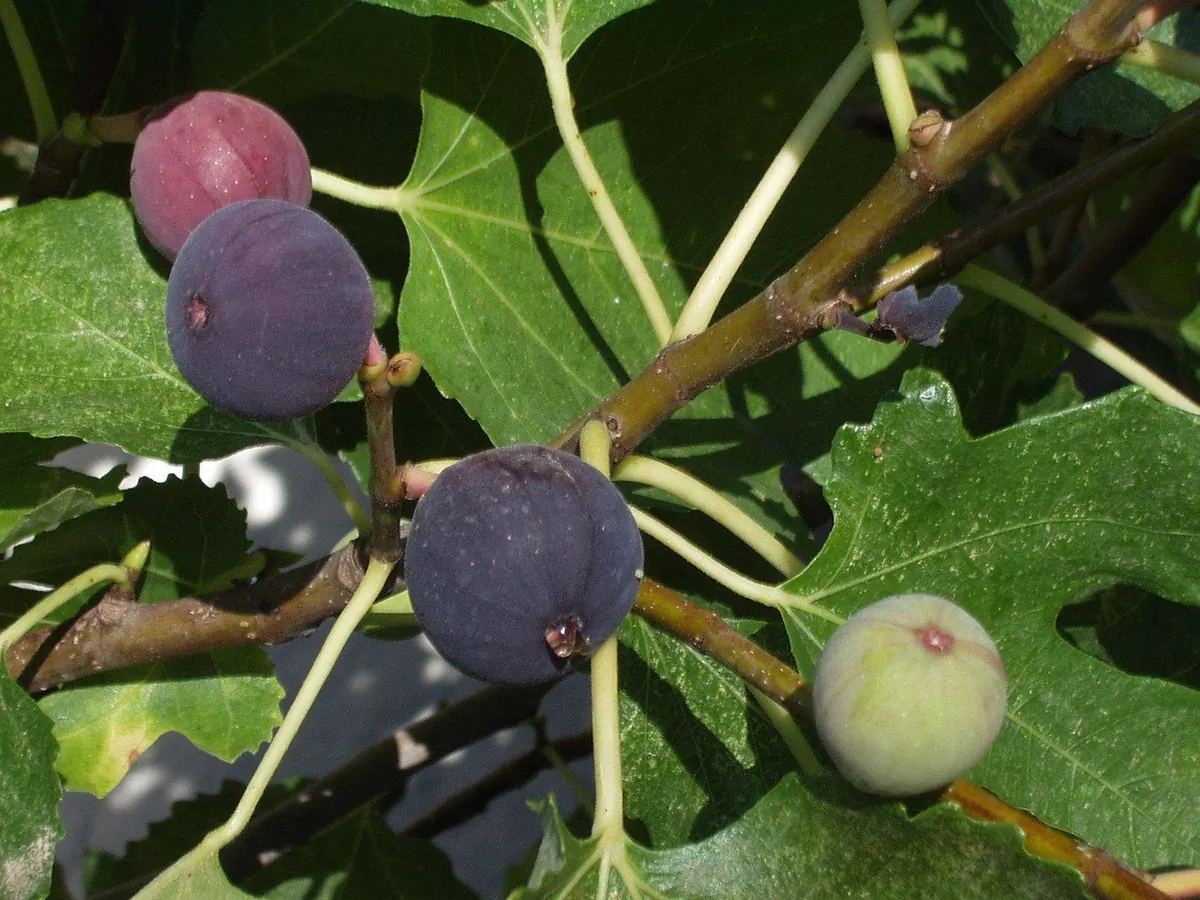
Figs have a reputation as tender exotics, but the tree is hardier than most gardeners expect. The real difficulty in Britain is not keeping a fig alive — it is getting the fruit to ripen before the warmth and light run out. Choose the right variety, keep the roots confined, pinch out the growth at the right moment, and a sunny wall can give you a genuinely good crop.
Figs produce two crops a year in warm climates. The breba crop forms on last year's wood and ripens in early summer; the main crop grows on the current season's shoots and ripens from late summer into autumn. In most of the UK the main crop is the one worth chasing, though a good breba crop is a bonus in a warm coastal or southern spot.
Variety choice matters more than anything else you will do. Look for early ripening, hardiness and a compact habit.
A fig in open, unrestricted ground puts its energy into leaves and wood. Confine the roots and the plant switches to fruiting. That is why container growing is not a compromise in Britain — it is often the best method.
Use a pot around 30–45cm across. Terracotta is stable and heavy, which helps in wind; plastic is lighter and easier to move under cover. Fill it with a loam-based compost such as John Innes No. 3, mixed with about a quarter horticultural grit for drainage. Soil-based compost holds moisture and anchors a top-heavy plant far better than a light peat-free mix alone.
Repot or root-prune every two to three years, otherwise the plant sulks and the compost sours:
If you must plant in the ground, line a planting pit with paving slabs or sink the fig in a bottomless bucket so the roots stay contained.
Give a fig the hottest spot you have: a south-facing wall, ideally with paving or gravel beneath it to throw back heat. A fan-trained fig against a wall is the classic British solution — the wall stores warmth through the day, and flat branches catch light evenly.
Space the main branches around 40cm apart and tie them in as they grow, removing shoots that head straight out towards you. Avoid frost pockets at the bottom of a slope, and keep the plant well away from cold, drying winds. Wear gloves when you prune: the milky sap can irritate skin.
From midsummer, the plant needs persuading to finish the fruit it has rather than start more it cannot ripen. In June or early July, pinch out the growing tip of each shoot once it has five or six leaves. This stops extension growth and pushes energy into the figs already forming.
Thin the main crop so each shoot carries roughly five to eight fruits, removing the smallest and any that have barely developed. In late summer and early autumn, twist off the pea-sized figs that have no chance of ripening, and remove any remaining after the first frosts.
Switch feeding in June: move from a balanced or nitrogen-rich feed to a high-potash tomato feed, applied every week or two while the fruit swells. Water consistently. Irregular watering is the main cause of split fruit, and a dry spell followed by a soaking can ruin a promising crop just before harvest.
Established figs cope with frost, but young plants and container-grown figs need help. Wrap the pot in bubble wrap to protect the roots, and move it against a house wall or into a cold greenhouse if you can. Horticultural fleece draped over the branches sees off the worst nights, but take it off on mild days — trapped moisture encourages mould, and plastic sheeting is worse still.
Water sparingly through winter. The compost should stay barely moist, never sodden. In spring, remove any dead or damaged wood and thin crowded growth before the new shoots break.
This is where most home growers go wrong. Figs do not ripen off the tree, so a fruit picked too early will never improve — it simply stays bland.
Pick in the morning and eat within a day or two; flavour fades quickly. If it tastes sweet, jammy and honeyed, it was ready. If it tastes of little, leave the next one longer.
An underripe fig is not a slightly disappointing fig. It is a different fruit altogether: dry, faintly bitter and coated in sticky sap.
Set realistic expectations. A pot-grown fig against a sunny south wall in southern England might give you a few dozen fruit in a good year; in a cool, wet summer you may get a handful. That is normal, not failure. Choose an early variety, keep the roots tight, pinch out the tips in early summer, feed with potash from June, and protect the pot in winter. If you have a greenhouse, move the container inside as the fruit starts to swell — the extra warmth can make the difference between a crop and a compost heap.
Photo: Simon / Pixabay

Simple UK recipes that turn soft, overripe bananas, berries and stone fruit into banana bread, smoothies, compote...
A practical guide to the low-cost kit that controls humidity, airflow and ethylene when ripening fruit at home, from...
Learn how to ripen green tomatoes indoors before frost using paper bags, boxes and trays, with simple light and...

Bring your fruit to perfect ripeness at home.
